

201 Ways to Fix a Relationship After Trust Is Broken
Trust doesn’t rebuild overnight, and it rarely comes back through one big gesture. It’s rebuilt in small, repeated actions — the way you talk, listen, show up, and follow through, day after day. Below are 201 specific ways to work toward that, grouped into themes you can lean on depending on where you and your partner are in the process.
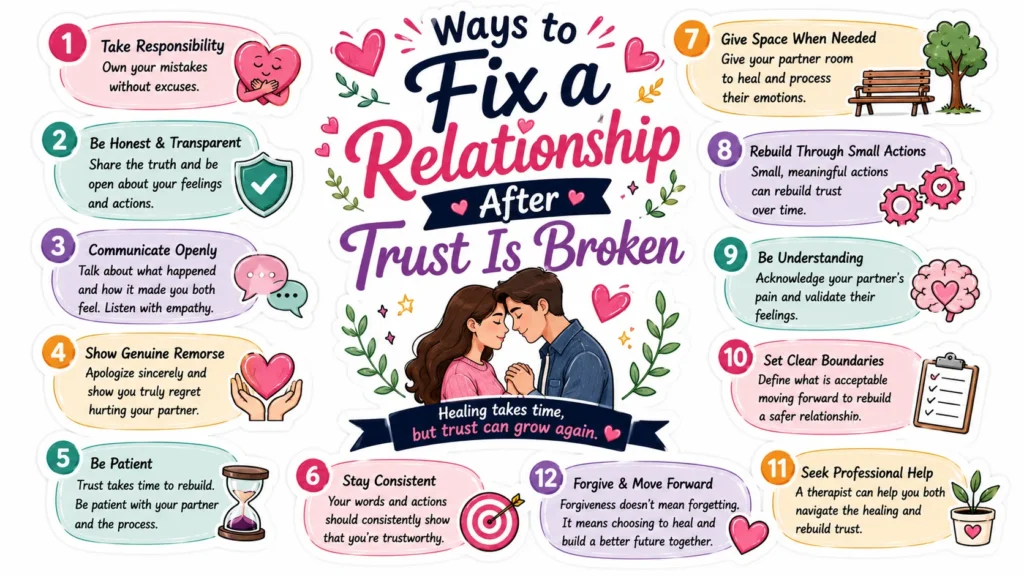
Ways to Fix a Relationship After Trust Is Broken
Open Communication
- Set aside regular, distraction-free time to talk about how you’re both feeling.
- Say what you mean directly instead of hinting and hoping they’ll guess.
- Ask questions instead of assuming you already know the answer.
- Share your worries before they turn into resentment.
- Talk about the hard topics instead of avoiding them.
- Check in with each other daily, even briefly.
- Let silence be okay instead of filling it with defensiveness.
- Tell them when something they said or did actually helped.
Rebuilding trust takes patience, honesty, and a willingness to reconnect with each other emotionally. If you’re looking for simple ways to express affection along the journey, these Wednesday love quotes can add a little warmth to an ordinary day.
Sincere Apologies
- Apologize for the specific action, not just “if you were hurt.”
- Avoid adding “but” to your apology — let it stand on its own.
- Acknowledge the impact your actions had, not just your intentions.
- Give the apology time to land instead of rushing toward forgiveness.
- Follow an apology with changed behavior, not just words.
- Apologize without expecting immediate reassurance in return.
- Say sorry in the way that means the most to them, not just to you.
- Repeat the apology if they need to hear it again — don’t treat it as a one-time transaction.
Active Listening
- Put your phone down when they’re talking about something serious.
- Repeat back what you heard to make sure you understood it correctly.
- Resist the urge to defend yourself before they’ve finished speaking.
- Notice their tone and body language, not just their words.
- Ask what they need from you before offering solutions.
- Let them finish their thought, even if it’s uncomfortable to hear.
- Validate their feelings even when you see things differently.
- Stay present in the conversation instead of planning your response.
Consistent Actions
- Do what you say you’re going to do, every time.
- Show up on time, especially when it matters to them.
- Keep small promises as carefully as big ones.
- Let your daily behavior match your stated intentions.
- Be predictable in the ways that make them feel safe.
- Follow through even when no one is checking on you.
- Keep showing up during the boring, unremarkable days too.
- Let consistency, not grand gestures, become your new normal.
Emotional Honesty
- Say how you actually feel instead of what feels safest to say.
- Admit when you’re struggling instead of pretending you’re fine.
- Share your fears about the relationship instead of hiding them.
- Be honest about your part in what went wrong.
- Tell them when something still hurts, even after time has passed.
- Own your emotions without blaming them for how you feel.
- Let yourself be honest even when it’s not flattering.
- Share the truth gently, but don’t withhold it to keep the peace.
Rebuilding Intimacy
- Reintroduce small physical affection, like holding hands, without pressure.
- Spend unstructured time together without an agenda.
- Rebuild emotional closeness before rushing physical closeness.
- Reconnect through shared activities you both used to enjoy.
- Be patient if intimacy returns slower than you’d like.
- Talk openly about what intimacy means to each of you now.
- Let closeness be earned back gradually, not forced.
- Create small rituals that bring you physically and emotionally closer.
Patient Understanding
- Accept that healing doesn’t happen on a fixed timeline.
- Expect setbacks and don’t treat them as total failure.
- Give your partner room to have a bad day about it, even months later.
- Avoid pressuring them to “just move on.”
- Understand that trust is rebuilt in layers, not all at once.
- Let their pace matter as much as your own eagerness to fix things.
- Recognize that patience itself is a form of care.
- Remind yourself that healing isn’t linear, and that’s normal.
Genuine Accountability
- Own your mistake fully instead of minimizing it.
- Avoid comparing your actions to someone else’s to feel less at fault.
- Accept consequences without resentment.
- Take responsibility even when it’s uncomfortable to sit with.
- Stop explaining and start actually changing the behavior.
- Let your partner hold you accountable without getting defensive.
- Check in on your own behavior instead of waiting to be caught slipping.
- Be willing to be corrected without shutting down.
Forgiving Hearts
- Decide to forgive when you’re ready, not when you feel pressured to.
- Separate forgiveness from forgetting — you can do one without the other.
- Let go of using the mistake as a weapon in future arguments.
- Forgive in stages if that’s what it takes to be genuine.
- Recognize that forgiveness is for your own peace as much as theirs.
- Allow yourself to still feel hurt while choosing to move forward.
- Communicate what forgiveness looks like for you, specifically.
- Give forgiveness without expecting it to erase the past instantly.
Building Transparency
- Share information proactively instead of waiting to be asked.
- Be open about your whereabouts and plans without being asked twice.
- Let them see your communications if that’s part of rebuilding trust.
- Explain your decisions instead of leaving them to guess your reasoning.
- Avoid keeping secrets, even small ones that feel harmless.
- Be upfront about mistakes as soon as they happen, not after they’re discovered.
- Offer transparency without waiting for it to be demanded.
- Let honesty be your default instead of your fallback.
Shared Healing
- Consider going to counseling together to process what happened.
- Create space to grieve the relationship you had before the breach.
- Support each other’s individual healing, not just the relationship’s.
- Talk about the future you both still want, together.
- Celebrate small signs of progress as a shared win.
- Avoid healing in isolation when you could be healing side by side.
- Recognize that both people were affected, even if only one made the mistake.
- Build new memories together to sit alongside the difficult ones.
Gentle Patience
- Let go of the urge to rush reconciliation.
- Soften your tone even when you’re frustrated with the pace of healing.
- Give space without disappearing emotionally.
- Avoid keeping score of how long healing “should” take.
- Stay gentle with yourself, not just with them.
- Let small progress count, even if it feels slow.
- Be patient with your own healing too, not just theirs.
- Choose kindness over frustration on the hard days.
Honest Reflection
- Ask yourself honestly what led to the breach of trust.
- Reflect on patterns, not just the single incident.
- Journal about what you’re learning through the process.
- Be willing to see your own role clearly, without excuses.
- Reflect on what you actually want the relationship to look like going forward.
- Consider what boundaries need to change based on what happened.
- Look at the relationship honestly, not through rose-colored memory.
- Use reflection to guide change, not just to feel better temporarily.
Rebuilding Connection
- Find small daily moments to reconnect, like a shared coffee or walk.
- Reintroduce humor and lightness where it feels natural.
- Ask about their day like you genuinely want to know.
- Rediscover shared interests you may have let slip.
- Plan low-pressure time together, without expectations attached.
- Reconnect through touch, conversation, and shared laughter.
- Let connection rebuild in small doses rather than forcing big moments.
- Notice and appreciate the effort your partner is making to reconnect too.
Emotional Support
- Be there for them on hard days, even unrelated to the trust issue.
- Offer comfort without needing to fix everything immediately.
- Check in on their emotional state, not just the state of the relationship.
- Validate their pain instead of rushing them past it.
- Show up for the emotional labor of rebuilding, not just the logistics.
- Let them lean on you, even if it takes time for that to feel natural again.
- Offer support without keeping a mental tally of what you’re owed.
- Ask directly what kind of support they need from you.
Shared Goals
- Talk about what you both want the relationship to look like in a year.
- Set small, shared milestones for rebuilding trust.
- Agree on what success in this process looks like for both of you.
- Revisit your shared goals regularly as things progress.
- Work as a team toward the same outcome, not opposing agendas.
- Celebrate shared progress, however small.
- Let shared goals replace old resentments as your focus.
- Build a version of the relationship you both actively want, not just the old one restored.
Gentle Reassurance
- Offer reassurance without being asked, when you sense they need it.
- Remind them of your commitment through actions, not just words.
- Be consistent with reassurance, not just generous with it occasionally.
- Reassure without becoming impatient if they need to hear it often.
- Notice when anxiety is rising and offer calm before it’s requested.
- Let reassurance be specific, not just a vague “everything’s fine.”
- Show reassurance through small, repeated gestures.
- Be patient with the reassurance they need, even if it feels repetitive.
Honest Commitment
- Recommit to the relationship out loud, clearly and specifically.
- Show your commitment through consistent daily choices.
- Avoid vague promises — be specific about what you’re committing to.
- Let your commitment be visible in how you prioritize the relationship.
- Reaffirm your commitment during hard moments, not just easy ones.
- Match your long-term words with your short-term actions.
- Commit to the process of rebuilding, not just the outcome.
- Let your commitment be steady, not conditional on quick results.
Emotional Safety
- Create a space where difficult feelings can be shared without punishment.
- Avoid using vulnerable disclosures against them later.
- React calmly when hard truths come up, rather than escalating.
- Let them express doubt or fear without it being treated as an attack.
- Build predictability into your reactions so they know what to expect.
- Avoid guilt-tripping them for still processing the hurt.
- Make it safe to bring up hard topics without fear of a blow-up.
- Protect the emotional safety of the relationship as carefully as the trust itself.
Shared Vulnerability
- Share your own fears about the relationship, not just theirs.
- Let yourself be seen struggling, not just recovering.
- Open up about what you’re learning about yourself through this.
- Be willing to cry, admit doubt, or show uncertainty together.
- Let vulnerability go both directions, not just from the person who was hurt.
- Share what scares you about rebuilding trust.
- Be honest about moments you feel like giving up, and why you’re not.
- Let shared vulnerability replace guardedness over time.
Loving Patience
- Let love guide your patience, even when progress feels slow.
- Choose warmth over frustration when old wounds resurface.
- Be patient the way you’d want to be treated if the roles were reversed.
- Let affection stay present even during the hard conversations.
- Soften criticism with care, even when addressing real issues.
- Give grace generously, without using it to avoid accountability.
- Let your patience be an active expression of love, not passive waiting.
- Stay loving even when the process feels exhausting.
Rebuilding Respect
- Speak to each other the way you did before things got hard.
- Avoid contempt or eye-rolling, even in frustrating moments.
- Respect their pace of healing, even if it differs from yours.
- Value their opinion, even when you disagree with it.
- Avoid dismissing their feelings as “too much” or “overreacting.”
- Show respect through your tone, not just your words.
- Respect boundaries they set during the healing process.
- Let respect be unconditional, not something they have to earn back.
Shared Effort
- Make sure both people are putting in visible work, not just one.
- Split the emotional labor of rebuilding trust evenly where possible.
- Notice and acknowledge each other’s effort out loud.
- Avoid keeping a scoreboard of who’s trying harder.
- Show up consistently, not just when it’s convenient.
- Contribute to the relationship’s healing in ways beyond just words.
- Let effort be sustained over months, not just the first few weeks.
- Treat the relationship as a shared project, not one person’s responsibility.
Tender Reassurance
- Use soft, warm language when addressing fears or doubts.
- Offer comfort through touch, tone, and presence, not just words.
- Let tenderness replace defensiveness in hard conversations.
- Reassure gently, without making them feel needy for asking.
- Hold space for their fear without rushing to dismiss it.
- Offer small, tender gestures that say “I’m still here.”
- Let your presence itself be a form of reassurance.
- Keep tenderness consistent, even during disagreements.
Mutual Growth
- See this period as an opportunity to grow individually and together.
- Learn new communication tools as a couple.
- Grow your emotional intelligence alongside each other.
- Let the relationship evolve into something stronger, not just repaired.
- Celebrate how far you’ve both come, not just how far you have to go.
- Use what you’ve learned to prevent similar issues in the future.
- Grow your capacity for empathy through this experience.
- Let mutual growth become the foundation of a stronger relationship.
- Recognize that a relationship that survives a breach of trust can come out more resilient than before.
Bonus Content: Extra Strategy Suggestions

Scenarios for Perfect Strategies
- Improving Communication: Use “Speak honestly about your feelings. Listen to your partner with care. Build trust through open dialogue” for heartfelt connection.
- Offering Apologies: Try “Apologize with heartfelt sincerity. Acknowledge your partner’s pain. Commit to change with honest effort” for sincere remorse.
- Showing Listening: Go “Listen to your partner fully. Avoid interrupting their words. Show care to rebuild trust” for empathetic support.
- Building Intimacy: Use “Share small moments of closeness. Hold your partner with care. Rebuild trust through gentle intimacy” for emotional closeness.
- Fostering Accountability: Try “Own your mistakes with honesty. Show your partner you care. Rebuild trust through genuine accountability” for trust restoration.
Ways to Elevate Your Strategies
- Add Sincere Depth: Use “Speak honestly about your feelings. Listen to your partner with care. Build trust through open dialogue” for heartfelt resonance.
- Match the Context: For communication, go “Speak honestly about your feelings. Listen to your partner with care. Build trust through open dialogue.” For apologies, try “Apologize with heartfelt sincerity. Acknowledge your partner’s pain. Commit to change with honest effort.” For listening, use “Listen to your partner fully. Avoid interrupting their words. Show care to rebuild trust.”
- Deliver with Care: Share “Apologize with heartfelt sincerity. Acknowledge your partner’s pain. Commit to change with honest effort” with humble remorse.
- Stay Sincere and Restorative: Use “Speak honestly about your feelings. Listen to your partner with care. Build trust through open dialogue” or “Apologize with heartfelt sincerity. Acknowledge your partner’s pain. Commit to change with honest effort” for emotional impact.
- Be Memorable: Try “Listen to your partner fully. Avoid interrupting their words. Show care to rebuild trust” for lasting, sincere resonance.
Conclusion
Rebuilding trust isn’t about a single conversation or one perfect apology — it’s built through hundreds of small, consistent choices over time. Communication, accountability, patience, and genuine effort from both people are what turn a broken moment into a stronger relationship. It won’t happen all at once, and that’s normal. What matters is that both people keep choosing to show up for the process, one honest step at a time.
FAQs
How long does it usually take to rebuild trust after it’s broken?
There’s no fixed timeline, since it depends on the severity of the breach and how consistently both people work toward repairing it. For many couples, it takes months of steady effort rather than weeks.
Can a relationship be stronger after trust is broken and rebuilt?
Yes, many relationships become more resilient afterward, since the process often forces both people to communicate more honestly and understand each other more deeply than before.
What if one partner is putting in more effort than the other?
This is worth addressing directly and early, since rebuilding trust generally requires effort from both people to feel sustainable and fair over time.
Is couples counseling necessary to rebuild trust?
It isn’t always necessary, but it can help, especially when communication has broken down or when it’s hard to navigate the process without outside support.
How do I know if the relationship is actually healing or just staying the same?
Look for small, consistent signs of change over time, such as improved communication, follow-through on promises, and a gradual reduction in defensiveness or tension during hard conversations.